


Can We Trust the Bible?
The Bible is not a single book dropped from heaven - it's a library of 66 books written byabout 40 authors over a span of roughly 1,500 years across 3 continents and in three different languages telling one unified story. Yet thousands of ancient manuscripts let us reconstruct the original text with astonishing accuracy, and archaeology keeps confirming its details. No ancient document has been transmitted more faithfully. The Bible has been tested more rigorously than any book in history - and it passes every test. That makes it the best explanation for a trustworthy written revelation from God.
Evidence for the reliability of the Bible
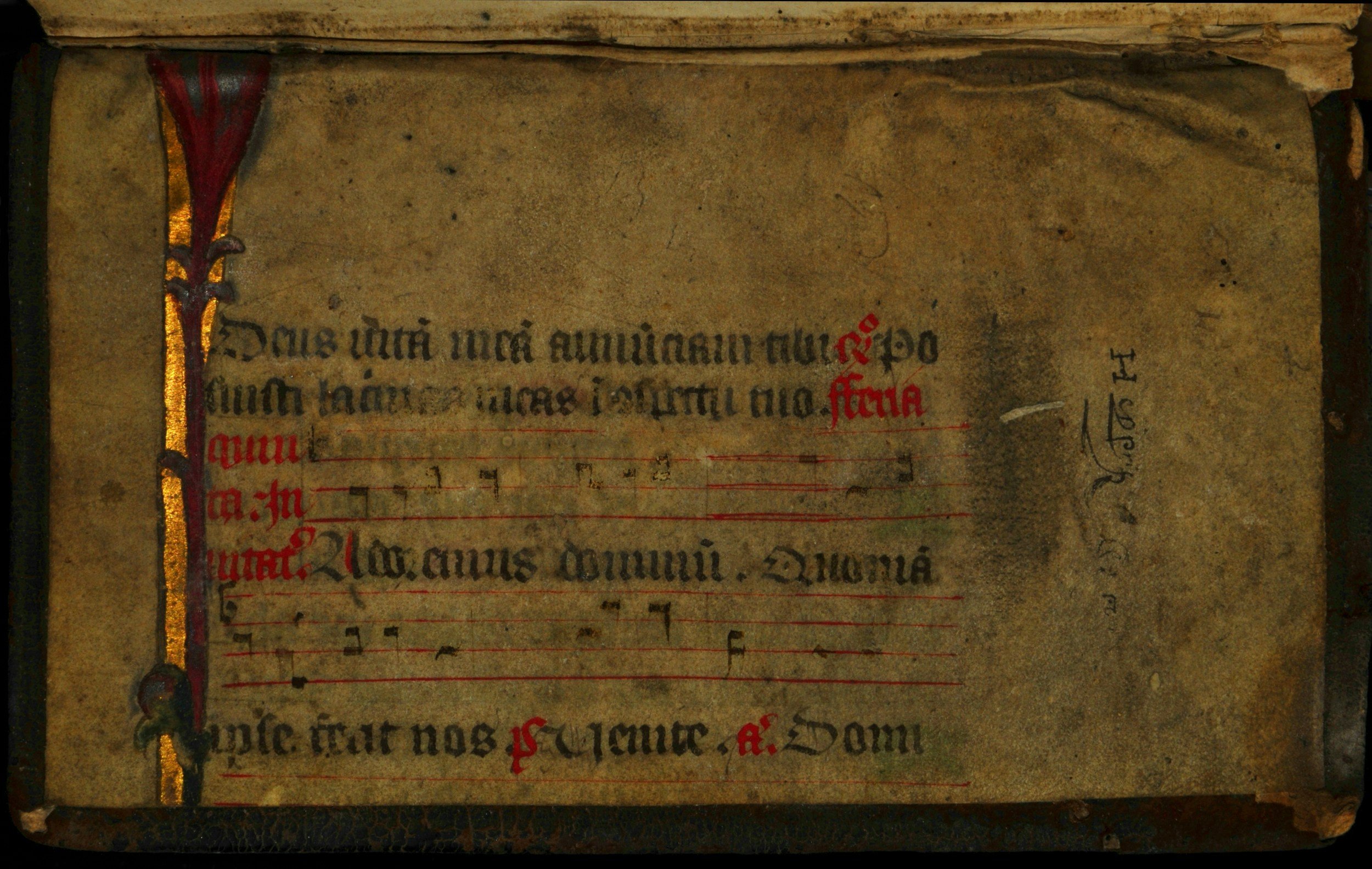
Fulfilled Prophecy
The Bible contains numerous prophecies that have been accurately fulfilled, including events related to the rise and fall of nations, the birth, life, and death of Jesus, and the destruction of cities.
Archaeological Evidence
Archaeological discoveries consistently affirm the Bible’s historical claims. Excavations have uncovered evidence supporting the existence of biblical cities like Jericho, Nineveh, and Jerusalem. Artifacts such as the Dead Sea Scrolls confirm the accuracy of Old Testament texts dating back thousands of years.
Historical Accuracy
Accurate history is characterized by dates, names of individuals, locations, events, and factual details. The Bible documents thousands of events, places, rulers, rivers, mountains, countries, cities, and artifacts that have been verified. It aligns with known historical occurrences and figures.

Scientific Accuracy
Although the Bible is not a science textbook, many of its statements align with scientific principles discovered much later. For example, the Bible describes the universe having a beginning (Genesis 1:1), the importance of sanitation (Leviticus), and the hydrological cycle (Job 36:27-28).
Evidence for the reliability of the Bible
-
Accurate history is firmly rooted in precise dates, influential figures, pivotal locations, and
facts that are confirmed to be true. The Bible serves as a valuable source, documenting
countless events, important places, powerful rulers, rivers, mountains, countries, cities,
and artifacts. This overview is just a glimpse of the extensive evidence that supports its
historical significance.

-
"Textual accuracy" refers to how closely a copy of a text represents its original version. The Bible is considered textually accurate in ways that are extremely rare among ancient documents.
Historians, textual critics, and early manuscript experts—both Christian and non-Christian—agree that we can reconstruct the original biblical text with remarkable precision.
More Manuscripts Than Any Other Ancient Work - The New Testament boasts an unparalleled quantity of manuscript evidence compared to any other surviving classical or ancient text. Scholars estimate there are over 5,800 Greek manuscripts alone, in addition to tens of thousands in other languages (like Latin, Coptic, and Syriac). This abundance provides an exceptionally wide base for textual criticism, allowing scholars to cross-reference and reconstruct the original text with high confidence.
Very Short Time Gap Between Original and Copies - The gap between the original composition of the New Testament books (mostly 50-100 AD) and the earliest surviving manuscript copies is remarkably small. Some fragments, like the Rylands Papyrus P52, date to the first half of the 2nd century (c. 125 AD), meaning they were copied perhaps only 25-50 years after the original autographs were written. This is a dramatically shorter interval than the centuries-long gaps typical for works by authors like Plato, Caesar, or Homer.
High Agreement Between Manuscripts
Despite the vast number of manuscripts and the centuries of hand-copying, the level of agreement between them is overwhelmingly high. While there are numerous variations (called textual variants), the vast majority are minor issues like differences in spelling, word order, or the presence/absence of a non-essential article. Scholars estimate that the variants do not affect any fundamental doctrine and that the text of the New Testament is 99% pure or certain.
Prophetic Accuracy
The Bible contains numerous prophecies (predictions) that have been accurately fulfilled,
including events related to the rise and fall of nations, the birth, life, and death of Jesus, as
well as the destruction of cities. These detailed predictions were often given centuries in
advance and include specific information about people, places, dates, and circumstances
that would have been impossible to foresee at the time.
For instance, over 300 prophecies concerning the Messiah have been fulfilled in the life of
Jesus of Nazareth. These include predictions about His birthplace in Bethlehem (Micah
5:2), His virgin birth (Isaiah 7:14), His betrayal for thirty pieces of silver (Zechariah 11:12),
His crucifixion alongside criminals (Isaiah 53:12), and even the piercing of His hands and
feet (Psalm 22:16). The statistical probability of these events happening by coincidence is
virtually impossible.
These fulfilled prophecies serve as powerful evidence that the Bible is not merely a
collection of human literature but rather the very Word of the living God, who declares “the
end from the beginning” (Isaiah 46:10).These fulfilled prophecies stand as one of the
strongest evidences that the Bible is not merely human literature, but the very Word of the
living God who declares “the end from the beginning” (Isaiah 46:10).
-
Prophecy: Ezekiel 26:3–14 (c. 587 BC) – Nebuchadnezzar would destroy mainland Tyre; many nations would come against it; it would be scraped bare like a rock and become a place for spreading nets; never rebuilt.
-
Prophecy: Isaiah 44:28–45:1–4 (c. 700 BC) – A king named Cyrus would subdue nations,
release the Jewish exiles, and rebuild Jerusalem and the temple.
Fulfillment: Cyrus the Great (559–530 BC) captured Babylon in 539 BC without a battle, issued the decree for the Jews to return (Ezra 1), and funded the temple rebuilding.
-
Prophecy: Isaiah 13:19–22; Jeremiah 50–51 (c. 700 & 620 BC) – Babylon would fall suddenly and never be inhabited again.
Fulfillment: Conquered by Cyrus in 539 BC; gradually abandoned; today only ruins and wild animals remain.
-
Prophecy: Isaiah 66:8 (c. 700 BC) – “Can a nation be born in a single day?”
Fulfillment: Israel declared statehood on May 14, 1948, recognized almost instantly by major powers.
-
Prophecy: Ezekiel 36:24; 37:21–22; Isaiah 11:11–12 (various dates 590–700 BC) – God would regather the Jews from “all the nations.”
Archeology
Archaeology plays a crucial role in confirming the reliability of the Bible, repeatedly
transforming skeptical objections into powerful evidence for Scripture’s accuracy.
For generations, critics dismissed biblical accounts as legend: the Hittites were said to be a
myth, the great city of Nineveh a fantasy, King David a folk-tale hero, and Pontius Pilate an
unverified name. Yet time and again, the archaeologist’s spade has unearthed the very
evidence that vindicates the biblical text.
Nelson Glueck (world renowned archeologist)
“No archeological discovery has ever controverted a biblical reference. Scores of
archeological findings have been made which confirm in clear outline or exact detail
historical statements in the bible”.
Quote of the day
“The Bible is alive, it speaks to me; it has feet, it runs after me; it has hands, it lays hold of me.”
Martin Luther
Social rights activist

Is the Bible reliable?
Commonly asked questions
-
The consistency of ancient manuscripts, such as the Dead Sea Scrolls, shows that the Bible has remained largely unchanged over thousands of years. Any minor differences do not affect core teachings.
-
The New Testament was written by eyewitnesses or those who spoke directly with eyewitnesses. Compared to other historical documents, the accounts of Jesus’ life are exceptionally well-preserved.
-
Most alleged contradictions arise from misunderstandings of context, translation differences, or variations in perspective. When examined carefully, the Bible’s message remains consistent.
-
The Bible stands apart due to its unparalleled manuscript evidence, historical reliability, and fulfilled prophecies. It has also influenced countless lives and societies, making it a unique and enduring text.