
Dive Deeper
Additional Evidence
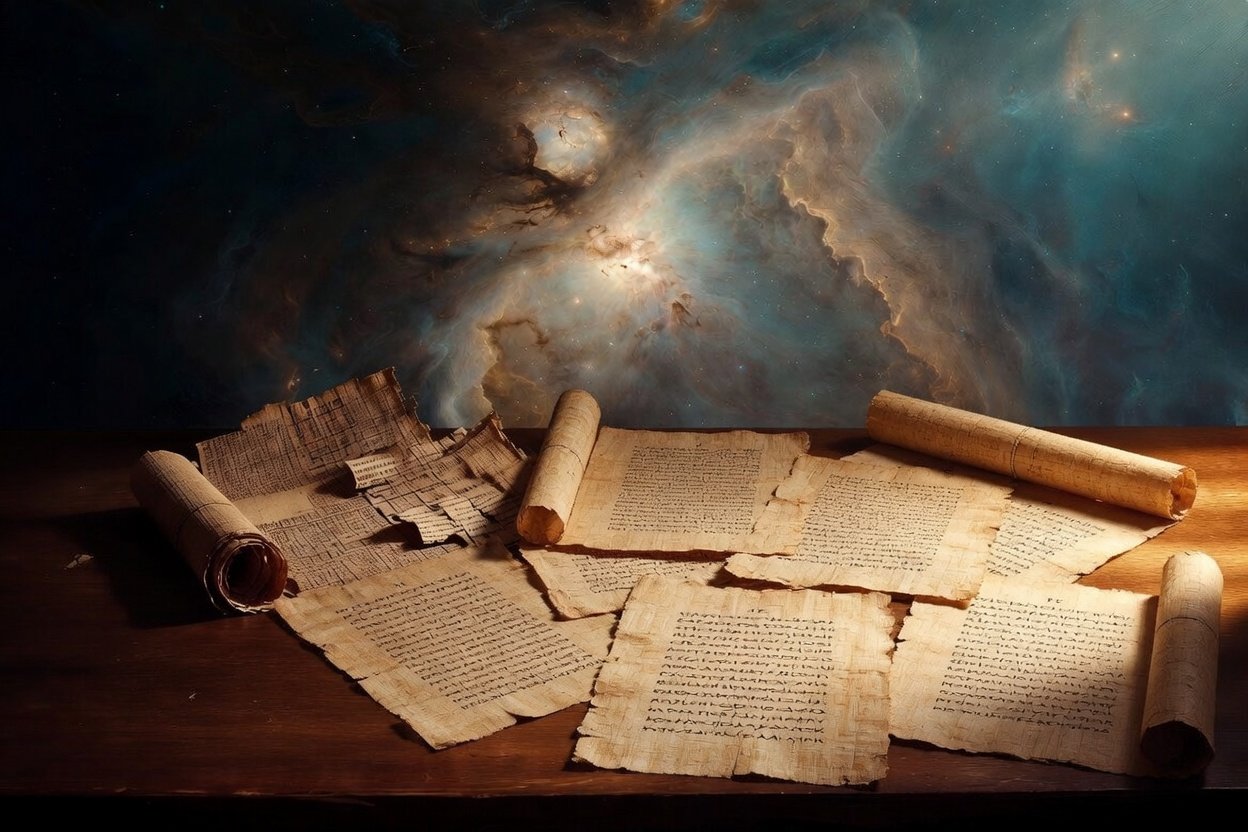
Having explored the strongest historical, philosophical, scientific, and archaeological evidence across every major topic, we now dive deeper into additional compelling artifacts and discoveries. These powerful supporting witnesses — including the Shroud of Turin and the earliest New Testament manuscripts — further confirm why Christianity stands as the best explanation.
The Shroud of Turin
One of the most mysterious and studied objects in the world is a simple piece of ancient linen: The Shroud of Turin. Many believe this is the actual burial cloth used to wrap Jesus after He was crucified.
While some try to dismiss it as a fake, modern science has spent over 500,000 hours studying it and still cannot explain how the image on it was created. When you look at the evidence, the “best explanation” is that this cloth is a silent witness to a miracle.
A “Photograph” from the Past?
- It’s Not Art: Scientists have proven the image isn’t a painting, a dye, a stain, or a scorch mark.
- It’s Only on the Surface: The image is “superficial,” meaning it only sits on the very outermost fibers of the cloth.
- It Has 3D Data: The image contains spatial information that allows it to be turned into a 3D map of a human body.
A Perfect Match to the Bible
The details on the Shroud perfectly match the Gospel accounts: crown of thorns, over 100 whip marks from a Roman flagrum, pierced side, nails in the wrists.
Real Science, Real Blood
Actual human blood (Type AB) with high levels of bilirubin — only present after extreme trauma.
The Best Explanation: The Shroud is a physical, empirical piece of evidence that matches the forensic details of the crucifixion. It is the “receipt” for the most important event in history.
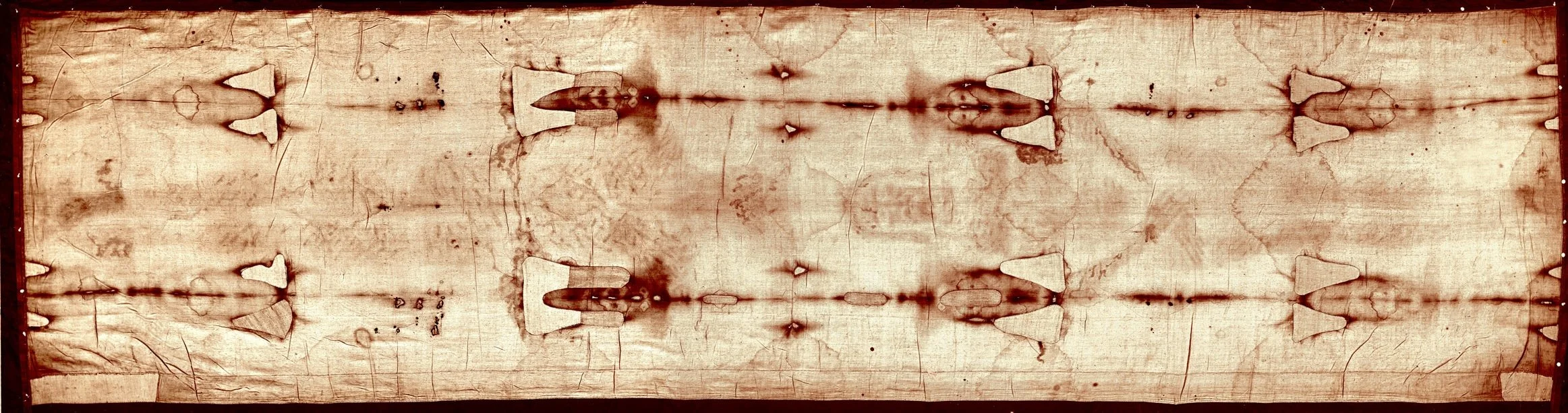
The negative image of the Shroud
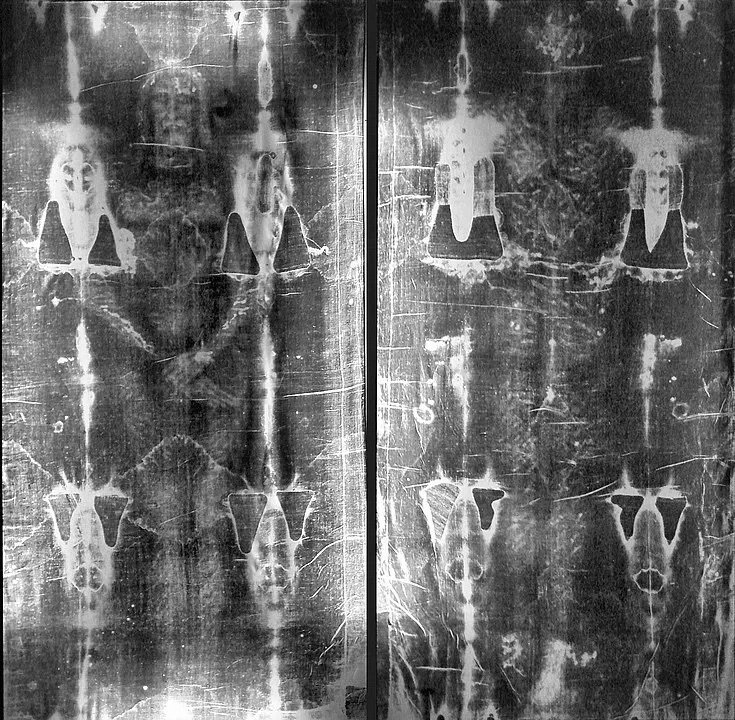
FRONT BACK
Dead Sea Scrolls
The discovery of the first Dead Sea Scrolls in 1947 is widely considered the greatest archaeological event of the twentieth century. The Scrolls are a collection of roughly 900 ancient manuscripts and up to 15,000 fragments discovered in the Qumran caves on the northwest shore of the Dead Sea.
Dating from the third century BC to the first century AD, they include fragments of every book of the Hebrew Bible (except the book of Esther) and provide profound historical insight into the roots of Christianity.
Historical Significance
Before this discovery, the earliest known Hebrew Bible manuscripts dated to the Middle Ages. The Dead Sea Scrolls pushed our knowledge of biblical texts back by over a thousand years, proving that the ancient texts were preserved with remarkable accuracy over the centuries.
Among the oldest known copies of Genesis, the fragment of the Scroll shown here contains the description of the first 3 days of the creation of the world.
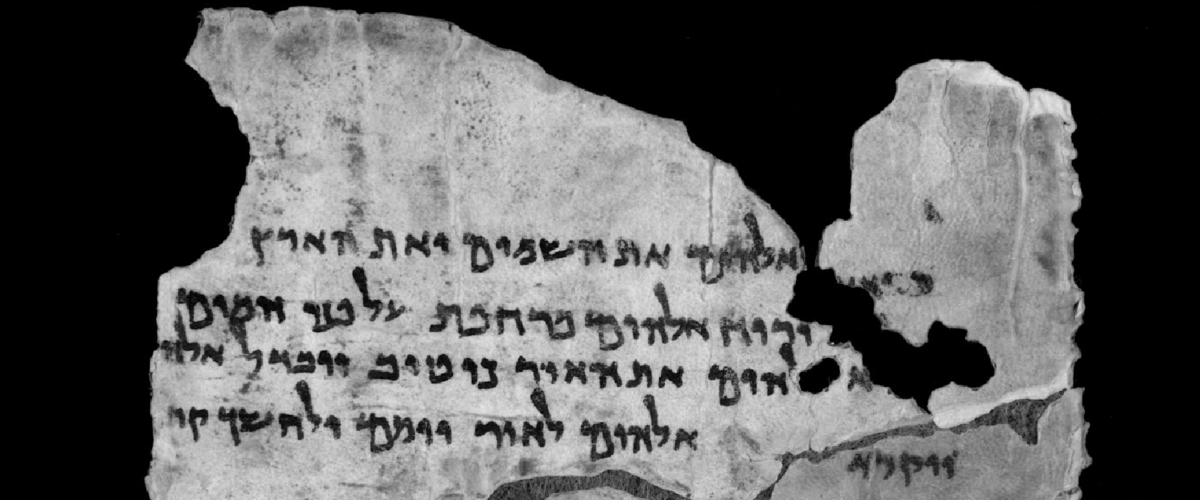
“In the beginning God created the heavens and the earth. And the earth was formless and void; And darkness was upon the face of the deep; And the spirit of God moved upon the face of the waters.”
GENESIS 1:1–2
This small scroll holds one of the earliest known copies of the Ten Commandments (the Decalogue), a foundational teaching in both Judaism and Christianity.
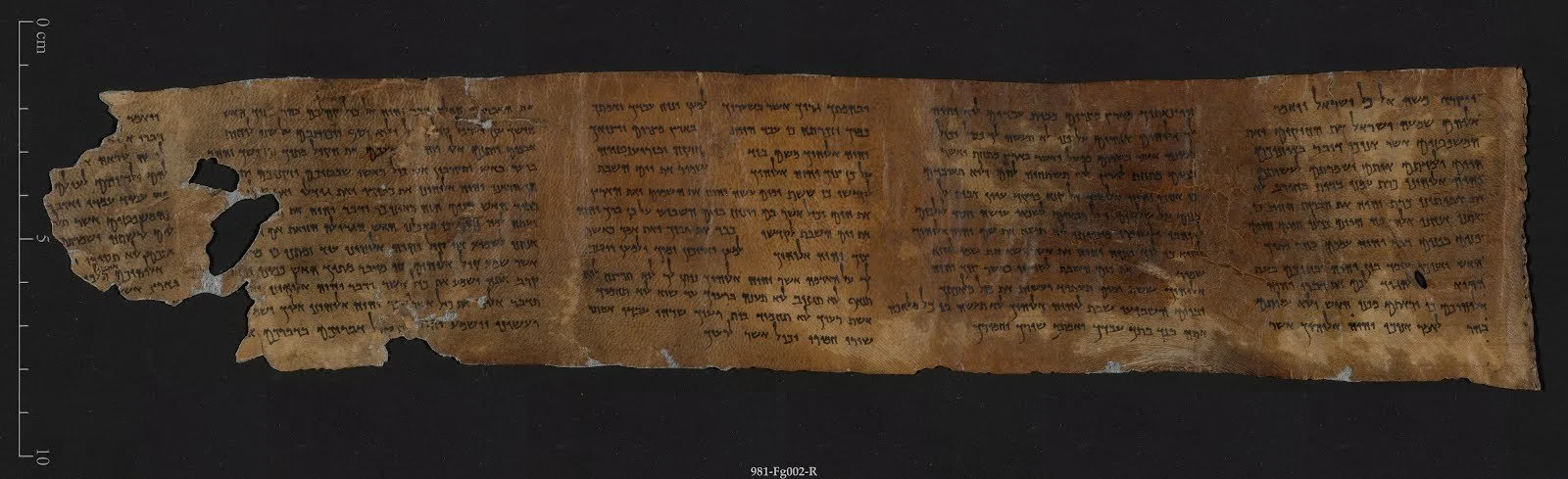
“I am the Lord your God who took you out of the land of Egypt out of the house of bondage. You are to have no other gods but me.”
DEUTERONOMY 5:6-7
P52 Manuscript
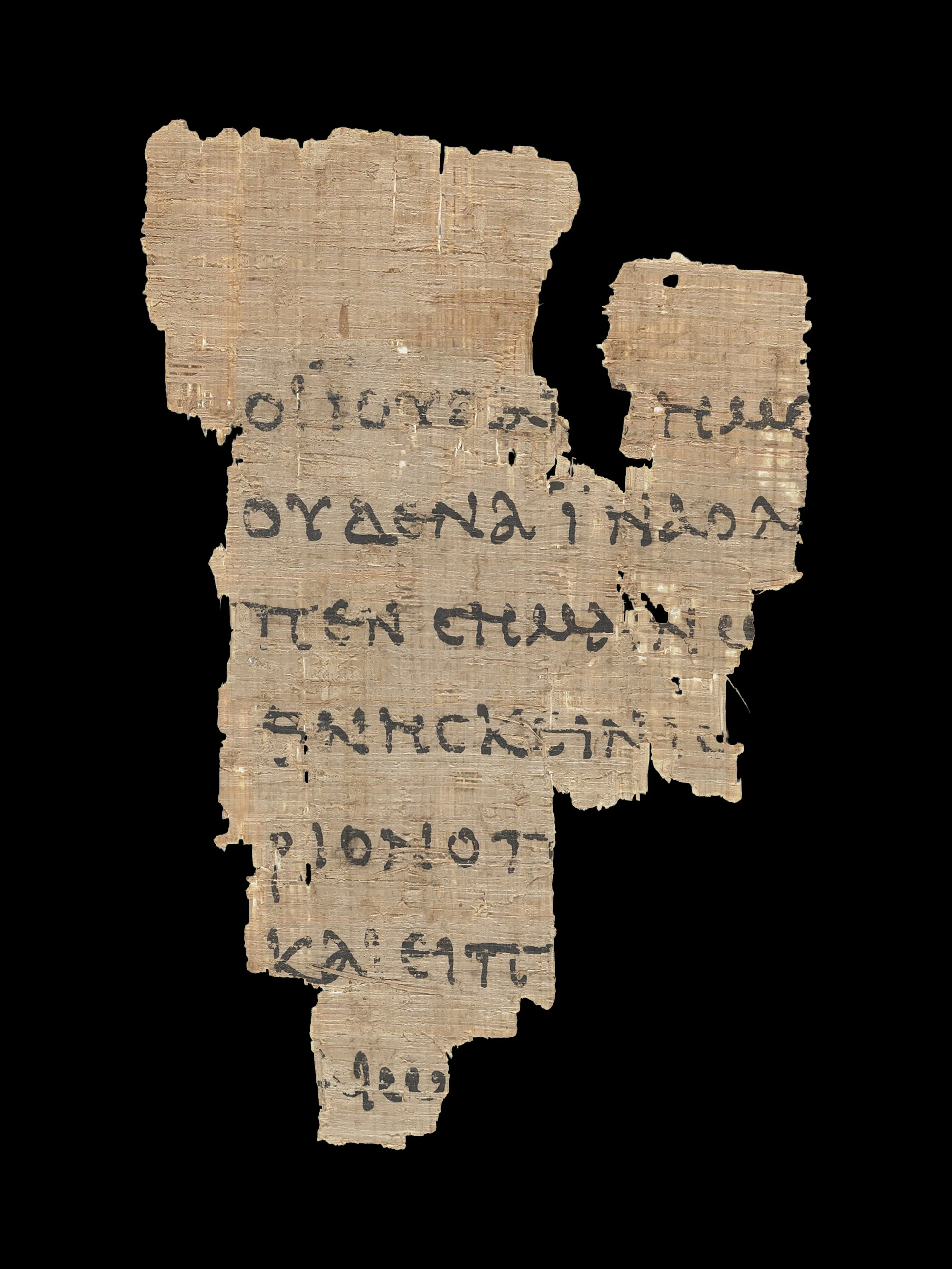
Papyrus 52 (P52) is widely regarded as the earliest known fragment of the New Testament. It is currently housed at the John Rylands Library in Manchester, England.
Scholars generally date the fragment to between A.D. 100 and 150, placing it within a few decades of the original Gospel of John.
The fragment contains portions of John 18:31–33 and 18:37–38, depicting Jesus standing before Pontius Pilate.
The significance of P52 lies in its early dating and its confirmation that the Gospel of John was already in circulation by the early second century. This supports the historical reliability of the Gospel accounts.
P64 Manuscript (Magdalen Papyrus)
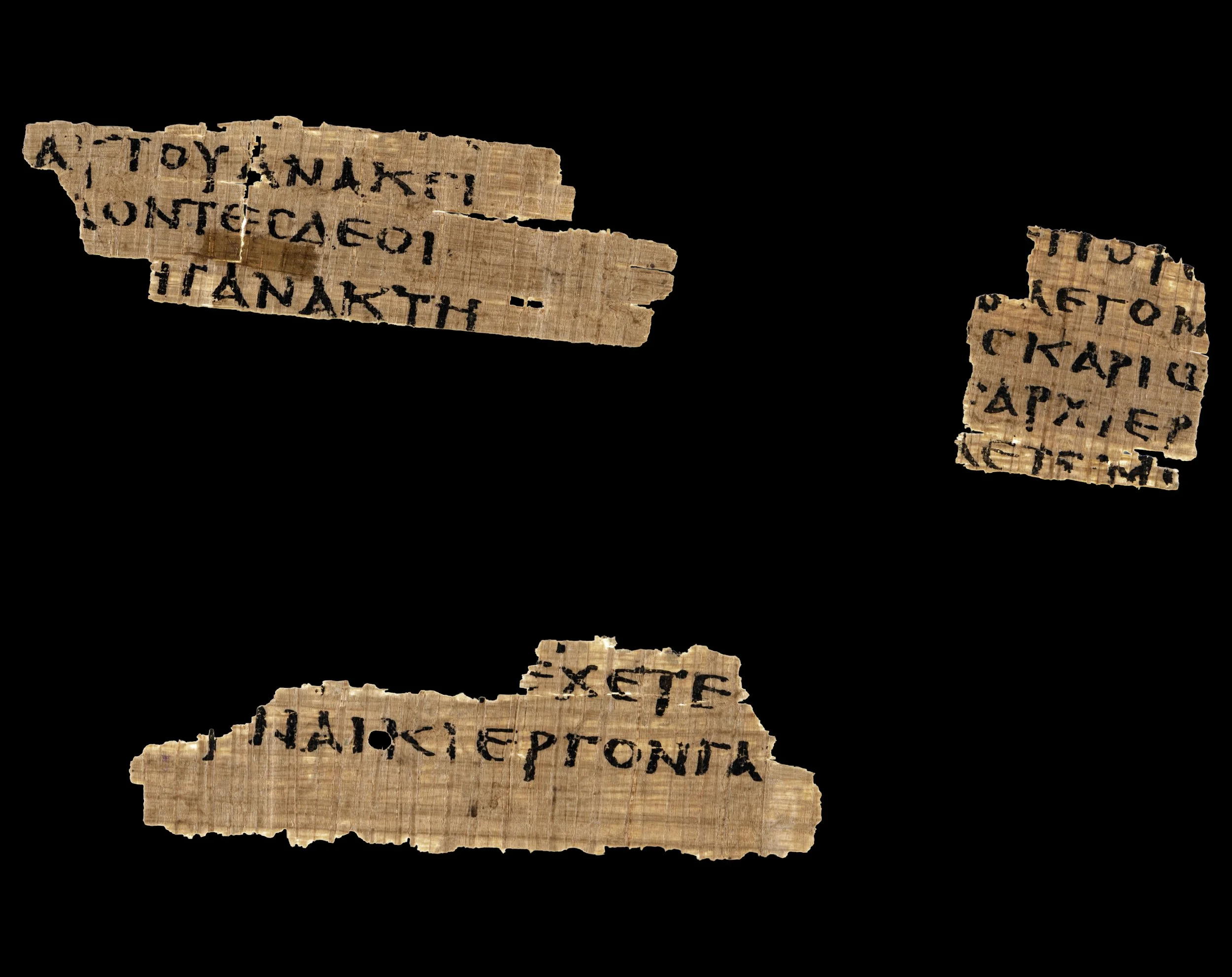
The Magdalen Papyrus (Papyrus 64, or P64) consists of three small fragments from the Gospel of Matthew, specifically portions of chapter 26.
These fragments preserve passages describing the anointing of Jesus at Bethany, Judas’s agreement to betray Him, and elements of the Last Supper narrative.
Scholars regard P64 as one of the earliest surviving manuscripts of the New Testament, with some proposing a first-century date.
The fragments contain early written occurrences of key names such as Jesus, Peter, and Judas Iscariot.
Kinesin Motor Protein
Inside every one of your cells is a microscopic “walking machine” called kinesin. It carries vital cargo along highways inside the cell with incredible precision.
This molecular motor literally has two “feet” that step along a track called a microtubule — one step at a time — while a new track is being built in front of it. The level of engineering is astonishing.
The Best Explanation: The irreducible complexity and purposeful design of systems like kinesin point powerfully to an intelligent Designer rather than undirected chance.
Bacterial Flagellum
The bacterial flagellum is a microscopic rotary motor — essentially an outboard motor on a single-celled organism. It spins at up to 100,000 RPM and propels the bacterium through liquid.
This incredibly complex machine is made of over 40 precisely engineered protein parts. Remove even one and the motor fails to function — a classic example of irreducible complexity.
The Best Explanation: Such sophisticated, highly coordinated molecular machinery is best explained by intelligent design.